




From arugula to watercress, leafy greens are fresh, beautiful, tasty and healthful. They're popular, too. Over the past several decades, salads have gone from simple bowls of iceberg lettuce to glorious culinary spectacles in the center of the plate. Greens such as spinach and kale once were primarily served steamed or sautéed as sides, but are now found in cooked and raw preparations, from smoothies to desserts.
There's one golden rule that remains true, though, and applies to any leafy green: Between purchasing and plating, washing them properly is key!
Food Safety and Leafy Greens
Leafy greens need to be handled safely just like any other food. Rinsing produce removes dirt and, while it’s not guaranteed to prevent foodborne illness, it helps reduce germs that may be present. Cooking also can help to control bacteria and parasites that cause foodborne illness. Leafy greens such as kale and chard are often enjoyed cooked.
Proper refrigeration is another important step. Perishable foods, including pre-washed or pre-cut produce, as well as cooked fruits and vegetables, shouldn’t be left at room temperature for longer than 2 hours. This timeframe decreases to 1 hour if the temperature is 90 degrees Fahrenheit or above.
Top Tips for Washing Leafy Greens
Whether your leafy greens are organic or conventionally grown, purchased from a farmers market or supermarket, served cooked or raw — the first step is to wash them properly. Here's how:
- Always start with clean hands. Wash your hands for 20 seconds or more with soap and clean water.
- When purchasing whole heads of lettuce, discard the outer layers and cut away any damaged areas on leaves or stems before preparing or eating the greens. If something seems rotten, discard it. Wash the remaining inner leaves under clean, running water. Avoid cross-contamination by using a clean knife to chop or shred the leafy greens after they have been washed and dried.
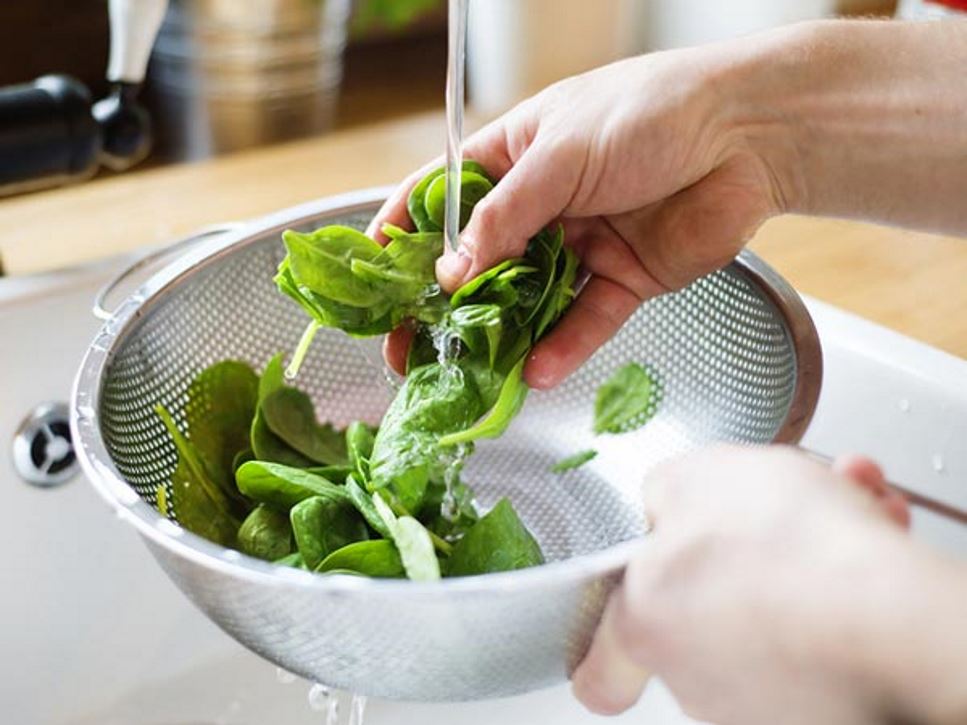
- When you have loose leaves, such as mesclun, that can't easily be held under cold running water, use a colander or a salad spinner. Toss them around under the running water and repeat. Using a sink filled with water to wash produce is never recommended.
- Never wash leafy greens with soap, detergent or bleach, since these can leave residues that are not meant to be consumed. The U.S. Food and Drug Administration doesn't recommend using commercial produce washes because these also may leave residues.
- After washing fresh greens, pat them dry with paper towels or a freshly clean kitchen towel — or use a salad spinner — to help remove excess liquid. Note: If you wash leafy greens before storing, you can potentially promote bacterial growth and enhance spoilage.
References
Find a Nutrition Expert
Looking for credible nutrition information and recommendations? The Academy of Nutrition and Dietetics' network of credentialed food and nutrition practitioners are ready to help!