




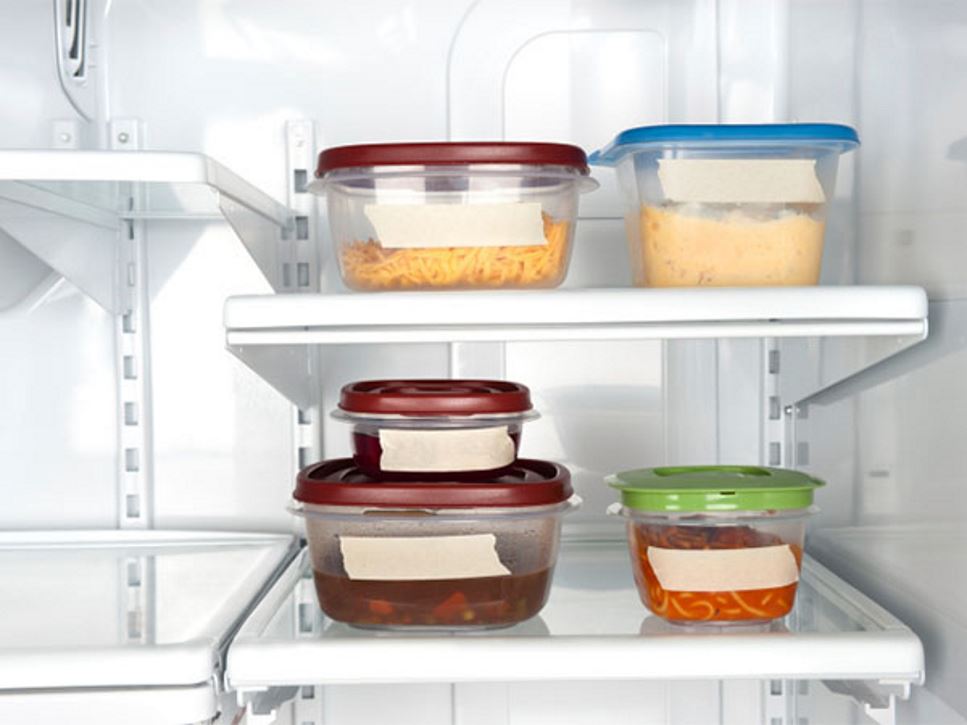
Whether you're on a quest to prevent food waste or you simply want to store prepared food, reusable containers can do the job. But are some food containers safer than others when it comes to personal and environmental health? Here's what you need to know.
What Does the Number on Plastic Containers Mean?
On the bottom of plastic food storage containers, you'll find a tiny triangle with a number (resin identification code) ranging from 1 to 7. This number indicates what the plastic is made of.
In general, safer choices for food use are numbers 1, 2, 4 and 5. The American Academy of Pediatrics recommends avoiding plastic containers with codes 3, 6 and 7. Plastic number 3 contains phthalates; 6 has polystyrene; and 7 can contain various plastics, such as Bisphenol A (BPA).
The use of BPA has been banned in baby bottles, sippy cups and in the packaging of infant formulas. However, its use in other food and beverage containers continues to be monitored and is currently considered safe by the U.S. Food and Drug Administration. Many BPA-free plastic food and beverage containers are available today, allowing consumers to minimize their exposure to it.
Are Plastic Containers Microwave-Safe?
Though polycarbonate plastic is strong and long-lasting, it can break down over time from high temperatures and overuse. Never microwave foods in plastic food containers, including margarine tubs and restaurant carryout containers. Plastic containers from packaged microwavable meals shouldn't be reused after their initial use; they're safely designed for one-time-use only. Also avoid putting plastic containers in the dishwasher.
Are All Plastic Containers Recyclable?
According to the Environmental Protection Agency (EPA), the U.S. recycled 9% of plastic waste created in 2018. This can contribute to greenhouse gas emissions, impacting the health of the environment.
Recycling is a great choice to help the environment. However, not all plastics are recyclable. Most recycling facilities accept numbers 1 and 2, whereas number 7 is rarely accepted by recycling facilities. Check with your local recycling facility to see which numbers are accepted near you.
The Bottom Line
Pick plastic food containers wisely and limit their use to cold food storage. They also can be ideal for transporting food. Consider glass or stainless steel containers for cold or hot foods, instead. Since both can be cleaned and reused, they're ideal for home food storage, too.
References
Find a Nutrition Expert
Looking for credible nutrition information and recommendations? The Academy of Nutrition and Dietetics' network of credentialed food and nutrition practitioners are ready to help!